
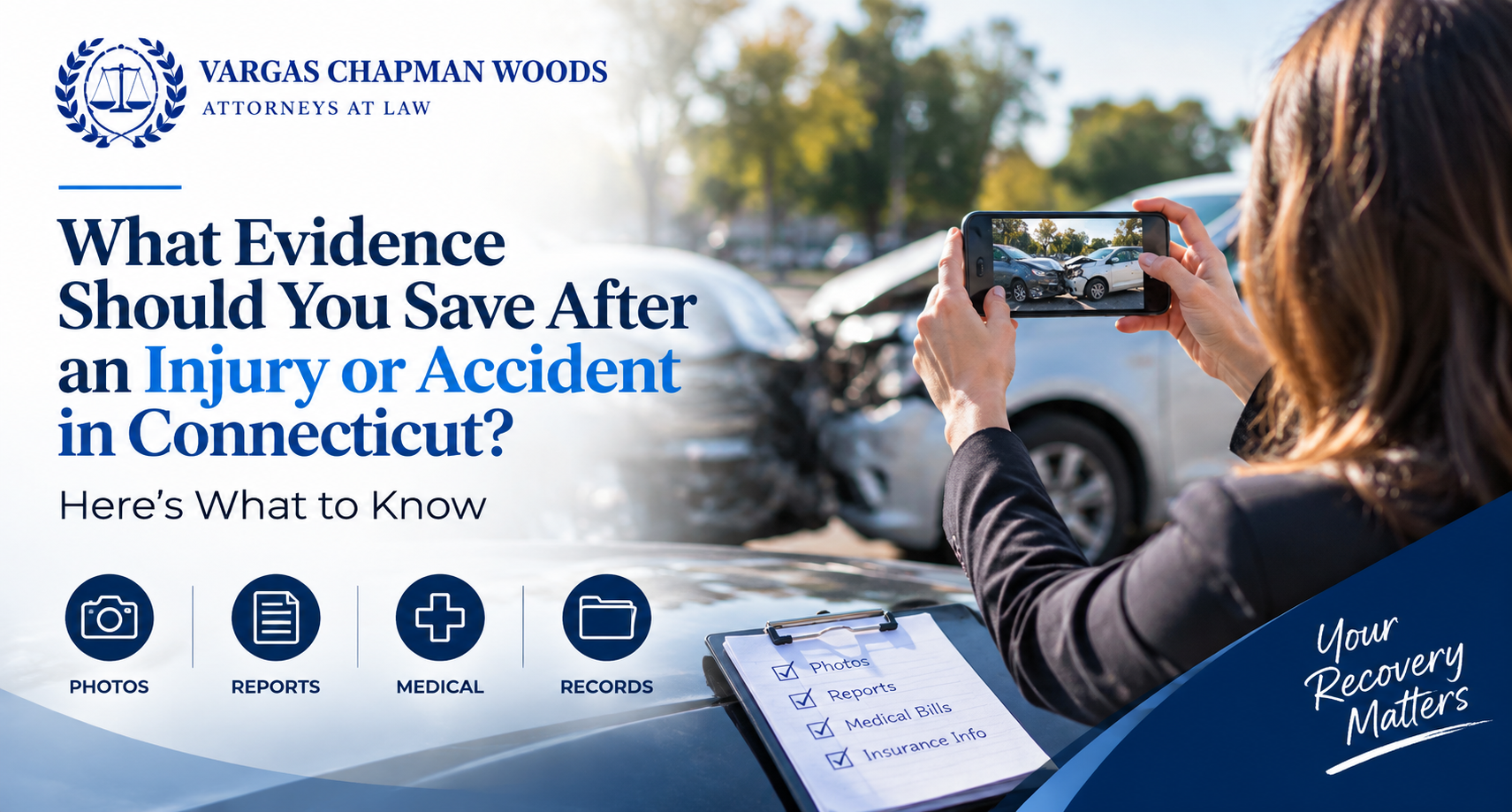
What Evidence Should You Save After an Injury or Accident in Connecticut?
Posted by: sara Tags: no tags | Categories: Personal Injury Laws
7
An injury or accident can happen in seconds, but the consequences may last much longer. Whether you are involved in a car crash, hurt on someone else’s property, injured at work, or concerned about an injury involving your child, the information you save afterward can become extremely important.
Evidence helps explain what happened, who was involved, how the injury affected you, and what expenses resulted from the incident. Memories can fade, physical conditions can change, and documents can become difficult to locate. That is why preserving useful information as early as reasonably possible can make a significant difference.
1. Photos and Videos of the Scene
When it is safe to do so, photographs and videos can provide a clear record of conditions immediately after an accident.
For a motor vehicle accident, consider documenting vehicle damage, license plates, road conditions, traffic signs, skid marks, debris, and the surrounding area. For a slip-and-fall or another property-related injury, photos of hazards such as wet floors, damaged steps, poor lighting, or uneven surfaces may be useful.
Conditions can quickly change, so early photographs may preserve details that are no longer visible later.
2. Information About the People Involved
Write down the names and contact details of the people involved in the incident. After a vehicle collision, this may include the other driver's name, insurance information, vehicle details, and license plate number.
If witnesses saw what happened, ask for their contact information as well. An independent witness may later be able to describe what they observed.
For people dealing with the aftermath of a collision, speaking with a Motor vehicle accident attorney near Wethersfield, CT can also help them understand what documentation may be relevant to their particular circumstances.
3. Police and Incident Reports
Depending on the type of accident, an official report may be created.
Car accidents may involve a police report, while an injury at a business, workplace, school, daycare, or another organization may result in an internal incident report.
If a report is prepared, find out how you can obtain a copy. Check the document for basic accuracy and keep it with your other records. These reports may provide useful details about when and where the incident occurred and who was involved.
4. Medical Records and Bills
Medical documentation can be particularly important after an injury. Keep records from emergency rooms, physicians, specialists, physical therapists, pharmacies, and other healthcare providers involved in your care.
Save bills, receipts, treatment instructions, appointment summaries, and related documents.
It may also help to keep a simple timeline of appointments and how your symptoms change. Follow the medical advice provided by your healthcare professionals and attend recommended follow-up appointments.
5. Evidence Involving a Child or Daycare Incident
When an injury involves a child, parents may need to collect different types of information. This could include photographs of visible injuries, medical documentation, communications with daycare staff, incident reports, attendance information, and notes about what the child or staff members said.
Keep original emails, text messages, written notices, and other relevant communications rather than relying entirely on memory.
If there are serious concerns about possible neglect or mistreatment, consulting a Daycare abuse attorney in Middletown, CT can help families understand what information may be important and what legal options may be available based on the specific circumstances.
6. Records of Lost Income
An injury may affect your ability to work. If you miss work or experience changes to your employment because of the injury, keep documents showing the financial impact.
Useful records can include pay stubs, employer correspondence, schedules, documentation of missed workdays, and information about changes in hours or duties.
If you are self-employed, invoices, contracts, business records, and previous income documentation may help show how your work was affected.
7. Receipts for Accident-Related Expenses
Medical bills are not necessarily the only expenses that can follow an accident. Depending on the situation, you may have transportation costs, prescription expenses, vehicle-related costs, medical equipment expenses, or other necessary out-of-pocket costs.
Rather than trying to remember these expenses months later, create a folder and save relevant receipts as they arise.
8. Insurance Communications
Save letters, emails, claim numbers, forms, and other communications you receive from insurance companies.
It can also be useful to keep notes of phone conversations, including the date, the person you spoke with, and the general subject discussed.
Avoid guessing when answering questions about an accident. If you are uncertain about a request from an insurer or how a statement could affect your situation, consider obtaining appropriate legal advice before responding.
9. A Personal Record of Your Recovery
Some effects of an injury cannot easily be shown through a photograph or medical bill. Consider keeping simple notes about your recovery.
Record significant symptoms, limitations, missed activities, sleep problems, or difficulties completing normal daily tasks. Keep these notes factual and consistent rather than exaggerating what you experience.
10. Keep Everything Organized
Evidence is more useful when you can actually find it. Create one physical or digital folder containing photographs, reports, medical documents, bills, receipts, insurance correspondence, and other relevant records.
For people who are unsure what documents matter, Vargas Chapman Woods provides information about personal injury, motor vehicle accidents, workers’ compensation, and other injury-related legal matters in Connecticut.
Final Thoughts
After an injury or accident, your health and immediate safety should come first. Once urgent needs have been addressed, preserving information can help create a clearer record of what happened.
Photos, witness details, reports, medical records, receipts, employment documents, and communications may all become important depending on the circumstances. Every case is different, so not every type of evidence will apply to every accident.
The key is simple: document what you reasonably can, keep original records, stay organized, and avoid waiting until important details have been forgotten or lost.